
HOBNAIL STITCH
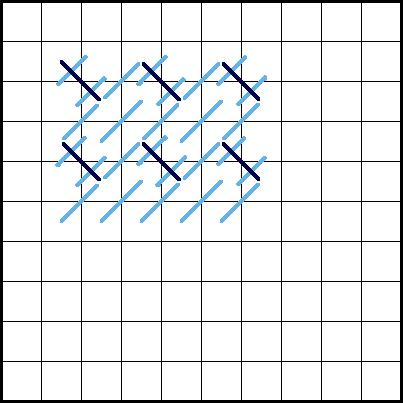
The Hobnail Stitch is similar to the reinforced cross stitch. However, with this stitch, tent
stitches are worked between the cross stitches. Four diagrams have been used to demonstrate this stitch.
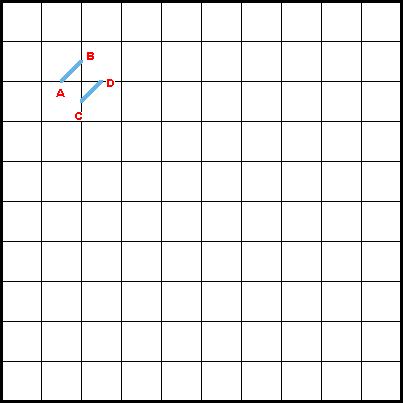
Hobnail Stitch (Diagram 1):
Bring the needle up at A, move up and to the right over one canvas intersections, bring the needle down at B. Bring the needle up at C (this is actually the same canvas hole as A), move up and to the right over one canvas intersection, bring the needle down at D (again, this is the same canvas hole as B). Basically, you will be working two stitches into up and over the same canvas intersection. Now, continue on to Diagram 2...
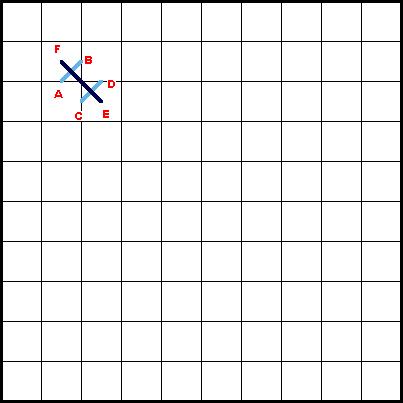
Hobnail Stitch (Diagram 2):
This part of the stitch is illustrated in dark blue. Beginning where we left off at D, bring the needle up at E, move up and to the left over one canvas thread, bring the needle down at F. This tent stitch is worked OVER the two previous stitches. Now, continue on to Diagram 3...
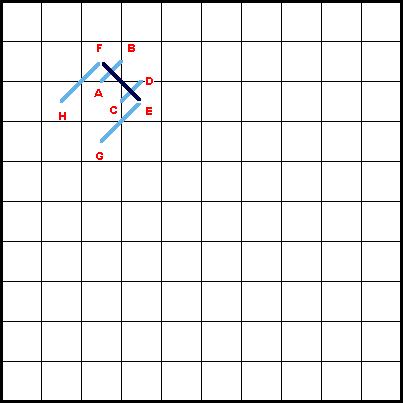
Hobnail Stitch (Diagram 3):
Beginning where we left off at F, we will start the row of tent stitches. Bring the needle up at G, move up and to the right over one canvas intersection, bring the needle down at E. Bring the needle up at H, move up and to the right over one canvas intersection, bring the needle down at F. Now, continue on to Diagram 4...
Hobnail Stitch (Diagram 4):
This diagram illustrates how a completed area of hobnail stitches should look. Notice how the single tent stitches are worked in between the crossed stitches. This pattern may be varied. For example, you may want to work a tent stitch, crossed stitch, tent stitch, crossed stitch and so on. Do not be afraid to experiment with different variations of this stitch...
 | ||||||
Stitch-opedia
An encyclopedia of needlepoint Stitches...

Copyright 2006...Stitchopedia...All Rights Reserved
*Stitch Index*
Select the first letter of the stitch you are looking for...
*Stitch Index*
Select the first letter of the stitch you are looking for...
| ||||||
