7 Rules For Stabilizing - When, How, Why?
By: ABC-embroidery-designs

What Is An "Embroidery Stabilizer" and Why Should We Stabilize? Embroidery stabilizers can be logically divided into two main types: "backings" and "toppings."

A "backing" is a piece of special material (usually nonwoven) that is placed UNDER the main fabric on which you intend to embroider, to make this fabric more stable.
Embroidery backings prevent fabric puckering, fabric stretching and deformation of embroideries after laundry.

"Topping," as you may already have guessed, is placed OVER the fabric on which you want to embroider. Embroidery topping is a special material that is designed to stop embroidery stitches from "sinking" into stitches-absorbing types of fabric. For example - if you embroider on fleece, jersey, terry cloth, velvet, corduroy, artificial fur and so on - using embroidery topping is simply a must. If you neglect to do this, your precious project will be hopelessly ruined. A topping is also great to use, if you want your design to "stand out" a little, even on regular fabric. Embroidery toppings usually remind nylon film. But don't be fooled - they shouldn't be made out of nylon. Most often, embroidery toppings are made out of gelatin-based water soluble substance, and easily get dissolved in warm water once your embroidery is finished. These water-soluble toppings are also called "wash-away", because they are washed away.

Another type of embroidery topping is heat-away, and they are removed with a hot iron. These ones are tricky. If you get a quality heat-away topping, it will be a blessing. A bad type, however, may leave you VERY angry and disappointed. Why? You'll discover below, once we explain when it's best to use each topping type.

Easy Rules for Stabilizing - When, How, and Why?

1. If you embroider on towels, velvet, fleece or other stitches-absorbing types of fabric, be sure to use topping film, to prevent stitches from sinking into the fabric. This is VERY important - without topping, such projects may be ruined.

There are two different types of embroidery toppings available - ones that are washed away with water, and ones that are removed with hot iron.

1.1 When to use heat-away topping:

The beauty of heat-away topping is that you remove it without wetting your project. Naturally, this is the only option when you're dealing with project that can't be washed. Using heat-away topping is convenient and fast, so you may want to use it
whenever your fabric can stand a relatively hot iron. (Unless you just love to use wash-away everywhere you can). The heat-away topping that we carry requires iron temperature of 260F (120C) (or higher). So, if your fabric can stand this temperature - you may use heat-away. You hoop your fabric the regular way, place a piece of topping above the fabric, and embroider your design. Once the embroidery is finished, remove the hoop, cut away the large pieces of topping, put a piece of regular paper over the embroidery and iron it through that piece of paper. The topping will remain on the paper, your embroidery will look great, smell great, and your iron will remain clean this way.

Heat-away topping tips:
1. If you're not sure whether your fabric supports 260F (120C) iron temperature - take a tiny test-piece of it, and try to iron, through a piece of paper. You'll know at once.
2. If a low quality heat-away backing is used, it may leave stains and unpleasant smell. So be careful to shop for good stuff.
3. NEVER use steam iron with heat-away topping.

1.2 When to use thin wash-away topping:

Use thin wash-away topping every time when your fabric is not suitable for use with heat-away topping, and wetting your project is not an issue. Visit this page to shop for thin Water-Soluble Topping.

1.3 When to use thick wash-away topping:

Use thick wash-away toping with really high-pile fabrics, where you would normally use two layers of thin water-soluble film. Visit this page to get some thick Water-Soluble Topping. If your fabric can support either water soluble of heat away topping - use the type you like more. It may certainly be a matter of personal preferences.

2. The heavier your fabric is, the heavier the weight of embroidery stabilizer that should be used; the lighter the fabric, the lighter the recommended machine embroidery stabilizer.

3. The denser your embroidery design, the heavier the weight of stabilizer you should use; the less dense the design, the lighter he recommended backing.
4. If you're using metallic thread, avoid 100% polyester embroidery stabilizer. Try to use embroidery stabilizers with some natural component (cotton or poly-viscose). Natural machine embroidery stabilizers are usually softer, create less friction with embroidery needle and thread, and therefore you embroider with less thread breaks. This is correct for any thread, but is especially noticeable with metallics.

5. Stretchy and unstable fabrics work best with cut-away stabilizers, because this type of backing can be removed by cutting it away without stretching the embroidered fabric in process. If you embroider on some kind of light cloth (like a T-shirt), be sure to use thin, translucent Now-Show Mesh Cutaway Embroidery Stabilizer.

6. Stable woven fabrics usually work well with tear-away embroidery stabilizer because, when you tear away the excess stabilizer, the fabric that is stable won't stretch or become deformed. And it is nice to use tearaway embroidery stabilizer
when possible, because when it is removed, the back side of the embroidery looks better than after using cutaway (less backing edges can be seen).

Here are shortcuts to purchase two most popular types of tearaway that we carry. One is 100% Cotton Tear-Away Embroidery Stabilizer and can be ironed on to fabric - quilters just love it. It becomes VERY soft and pleasant after laundry. The second one is more universal Poly-Viscoze Tear-Away Embroidery Stabilizer, a little more stable than the above cotton embroidery stabilizer.

7. If, for some reason, you need the stabilizer to be removed completely (for example, if you embroider on organza, or create cut-work or stand-alone lace), use strong Water-Soluble Stabilizer as backing. Usually we prefer to use fabric-type Water Soluble Stabilizer, because it practically doesn't stretch, "sits" great in hoop
and behaves like regular nonwoven fabric until you wash it away. Fabric type water-soluble stabilizer also doesn't stiffen at all, and can be stored for many years without losing it's good qualities.

8. If one of the following situations apply, use fusible (heat-away) backing that can be removed from the embroidered item by using a hot iron: 8.1 Your fabric and design need embroidery stabilizer to remain under the stitches, but you can't use tear-away or cut-away (the design and/or fabric may be too delicate for tear-away and/or too sheer for cut-away).
8.2 Your project is NOT WASHABLE, too delicate for tear-away and/or too sheer for cutaway.
8.3 You're working with some special technique, like making lace at an edge, and water soluble stabilizer isn't enough.
8.4 You want to create stand-alone embroidery from a design thatisn't digitized as stand-alone (you can just embroider on fusible embroidery stabilizer, cut the excess, then heat away the edges). You may wonder why water-soluble embroidery stabilizer is more frequently used for correctly digitized lace designs. The reason is that it's much easier to remove water-soluble stabilizer. CAUTION: NEVER, NEVER, NEVER use a STEAM iron with fusible stabilizer. The stabilizer will melt and ruin your fabric.

How To Store?

Many machine embroidery stabilizers look alike and are available in different weights, so it may be a good idea to keep them in the original packaging or in clearly marked bags. The identifying information you might need includes:

1. Name and type of stabilizer
2. Weight of stabilizer
3. Its use
4. Brand ( to make sure you restock only the best ones )

About the Author:
Visit this page to see all Machine Embroidery Stabilizers that we carry. ABC-embroidery-designs.com, All rights reserved
Article Source: http://www.hobbyarticledirectory.com
Print Me
Byzantine Stitch - Diagram 1
Byzantine Stitch - Diagram 2
BYZANTINE STITCH
The Byzantine Stitch is a quick and easy stitch suitable for filling large areas of canvas. It is similar to the Jacquard Stitch, except for the added rows of continental
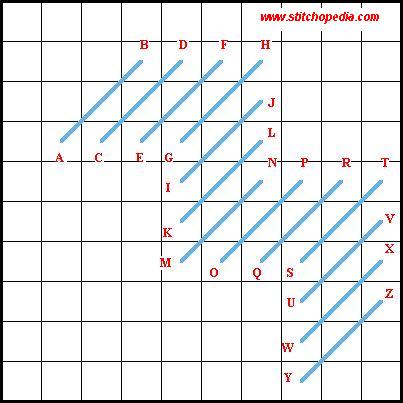
Byzantine Stitch (Diagram 1):
Bring the needle up at A, move up and to the right over two canvas intersections, bring the needle down at B. Bring the needle up at C, move up and to the right over two canvas intersections, bring the needle down at D. Bring the needle up at E, move up and to the right over two canvas intersections, bring the needle down at F. Bring the needle up at G, move up and to the right over two canvas intersections, bring the needle down at H. Bring the needle up at I, move up and to the right over two canvas intersections, bring the needle down at J. Bring the needle up at K, move up and to the right over two canvas intersections, bring the needle down at L. Bring the needle up at M, move up and to the right over two canvas intersections, bring the needle down at N. Bring the needle up at O, move up and to the right over two canvas intersections, bring the needle down at P. Bring the needle up at Q, move up and to the right over two canvas intersections, bring the needle down at R. Bring the needle up at S, move up and to the right over two canvas intersections, bring the needle down at T. Bring the needle up at U, move up and to the right over two canvas intersections, bring the needle down at V. Bring the needle up at W, move up and to the right over two canvas intersections, bring the needle down at X. Bring the needle up at Y, move up and to the right over two canvas intersections, bring the needle down at Z.
This completes the first row of Byzantine Stitches. Continue on to Diagram 2 to see how the next row is worked into the first...
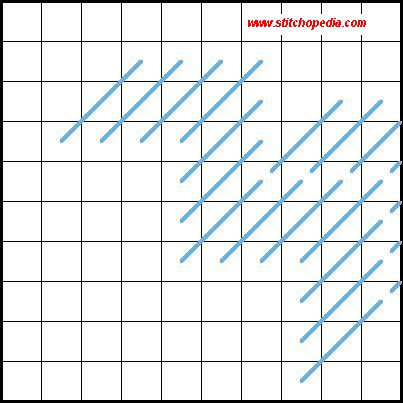
Byzantine Stitch (Diagram 2):
The second row is worked into the first row from bottom to top. The next row and all subsequent rows would be worked in the opposite direction of the row before.
 
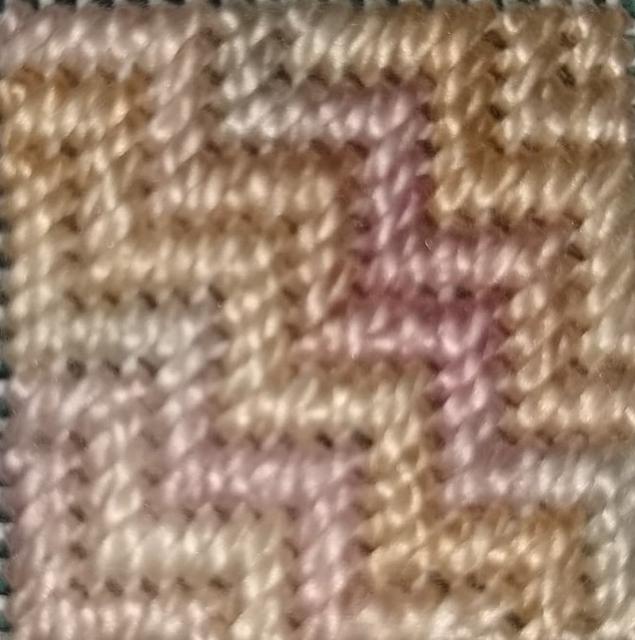
stitches that separate the Byzantine Stitches within the Jacquard Stitch. The Byzantine Stitch creates a step-like pattern. The size of the steps may vary. For a more interesting look, try using more than one color yarn. Two diagrams have been used to demonstrate this stitch. Clicking on the PRINTABLE VERSION icon, located at the end of the series of diagrams, will direct you to the page to print these instructions.
Do you have a sample of this stitch that you would like to share? If so, click here...

HOME

ABOUT US

CONTACT US!

SITE MAP

LINKS


***Stitch Index*** (Alphabetical)
A - I

2,4,6,8 & Tie Stitch

Algerian Eye Stitch

Algerian Eye Daisy
Stitch

Algerian Filling Stitch

Algerian Plait Stitch

Alternating Cross
Stitch

Astrakhan Stitch

Aubusson Stitch

Back Stitch

Bargello Stitch

Basketweave Stitch

Bazaar Stitch

Binding Stitch

Bokhara Couching Stitch

Bokhara Couching Stitch (Diagonal)

Bokhara Couching Stitch (Staggered)

Brazilian Stitch

Brick Stitch

Brighton Stitch

Bullion Knot

Buttonhole Stitch

Buttonhole Stitch (Detached)

Buttonhole Stitch (Double)

Buttonhole Stitch (Tailored)

Buttonhole Stitch (Whipped)

Buttonhole Wheel
Stitch

Byzantine Stitch

Cable Stitch

Cashmere Stitch

Chain Stitch

Chain Stitch
(Braided Variation)

Chain Stitch
(Heavy Variation)

Chain Stitch
(Interlaced Variation)

Chain Stitch (Lazy
Daisy Variation)

Chain Stitch
(Raised Variation)

Checker Stitch

Continental Stitch

Coral Knot Stitch

Couching Stitch

Couching Stitch (Buttonhole Variation)

Couching Stitch (Herringbone Variation)

Couching Stitch
(Open Chain  Variation)

Cretan Stitch

Cretan Stitch
(Diagonal Variation)

Cross Stitch

Cross Stitch (Bound)

Cross Stitch (Diagonal)

Cross Stitch (Heavy)

Cross Stitch (Houndstooth)

Cross Stitch (Reinforced)

Cross Stitch
(Reversed Double)

Cross Stitch
(Staggered)

Cross Stitch (St.Andrew)

Cross Stitch
(St.George)

Cross Stitch (Trame)

Cross Stitch (Triple)

Cross Stitch
(Two-Sided)

Cross Stitch
(Woven)

Cushion Stitch

Czar Stitch

Diagonal Stitch

Darning Stitch

Diagonal Buttonhole Stitch

Diagonal Interlaced Stitch

Diagonal Leaf Stitch

Diamond Stitch

Diamond Eyelet Stitch

Diaper Pattern Stitch

Double Cross Stitch

Double Knot Stitch

Double Star Stitch

Double Stitch

Double Straight
Cross Stitch

Droit Stitch

Eastern Stitch

Economic Stitch

Egyptian Stitch

Encroaching Slanted Gobelin Stitch

Eye Stitch

Eye Stitch with Backstitch

Fan Stitch

Fancy Stitch

Feather Stitch

Fern Stitch

Fishbone Stitch

Fishbone Stitch (Diagonal)

Flame Stitch

Flat Stitch

Flat Stitch (Crossed)

Florentine Stitch

Florentine Stitch (Split)

Fly Stitch (Closed)

French Knot

French Stitch

Ghiordes Knot

Gobelin Stitch

Gobelin Droit Stitch

Gobelin Filling Stitch

Gobelin Stitch
(Trammed Upright)

Greek Stitch

Half Cross Stitch

Herringbone Stitch

Herringbone Stitch (Double)

Herringbone Gone Wrong Stitch

Herringbone Stitch
(Six Step)

Hobnail Stitch

Hungarian Stitch

Hungarian Diamond Stitch

Hungarian Ground
Stitch

Hungarian Ground
Stitch (Diagonal)

Hungarian Point Stitch

Interlocking Gobelin Stitch


***Stitch Index*** (Alphabetical)
I - Z

Irish Stitch

Jacquard Stitch

Kalem Stitch

Kelim Stitch

Kilim Stitch

Knitting Stitch

Knitting Stitch (Diagonal)

Knitting Stitch
(Reverse Tvistom)

Knotted Stitch

Knotted Stitch (Single)

Ladder Stitch

Leaf Stitch

Leaf Stitch (Diagonal)

Leaf Stitch with Backstitch

Leviathan Stitch

Leviathan Stitch (Double)

Leviathan Stitch
(Triple)

Long Armed Cross Stitch

Long Stitch

Long and Short Stitch

Loop Stitch

Mexican Cross Stitch

Milanese Stitch

Montenegrin Stitch

Moorish Stitch

Mosaic Stitch

Mosaic Stitch (Crossed)

Mound Stitch

Nobuko Stitch

Oblique Stitch

Oblique Stitch (Diagonal)

Oblique Stitch (Reverse)

Oblique Slav Stitch

Oblong Cross Stitch

Oblong Cross Stitch with Backstitch

Oriental Stitch

Outline Stitch

Palestrina Stitch

Palace Pattern Stitch

Paris Stitch

Parisian Stitch

Pavillion Stitch

Perspective Stitch

Plait Stitch

Plait Stitch (Crossed)

Plait Stitch (Square)

Plaited Edge Stitch

Plaited Gobelin Stitch

Plaited Interlaced Stitch

Portuguese Cross Stitch

Portuguese Stem Stitch

Princess Pattern Stitch

Pyramid Stitch

Quick Point

Raised Stitch

Raised Cross Stitch

Ray Stitch

Ray Stitch (Expanded)

Renaissance Stitch

Rep Stitch

Reverse Bargello

Reversed Basketweave Stitch

Reversed Cross Stitch

Rhodes Stitch

Ribbed Wheels Stitch

Rice Stitch

Rice Stitch (Padded)

Rococco Stitch

Roman Stitch

Rope Stitch

Roumanian Stitch

Rug Binding Stitch

Rya Stitch

Satin Stitch

Satin Stitch
(Alternating)

Satin Stitch
(Padded)

Scotch Stitch

Scotch Stitch (Alternating)

Scotch Stitch (Condensed)

Scotch Stitch (Crossed)

Scotch Stitch (Woven)

Scottish Stitch

Sheaf Stitch

Shell Stitch

Single Knotted Stitch

Slanted Gobelin Stitch

Smyrna Cross Stitch

Sorbello Stitch

Soumak Stitch

Spanish Stitch

Spider Web Stitch

Split Stitch

Sprats Head Stitch

Square Plait Stitch

Star Stitch

Star Stitch (Large)

Stem Stitch

Stem Stitch
(Diagonal)

Stepped Sheaf Stitch

Surrey Stitch

Sutherland Pattern Stitch

Tapestry Stitch

Tent Stitch

Tent Stitch (Alternating)

Tent Stitch
(Diagonal Mosaic)

Tie Stitch

Trame

Trammed Tent Stitch

Triangle Stitch

Tufting Stitch

Turkey Stitch

Tvistom Stitch

Two Sided Italian
Cross Stitch

Upright Cross Stitch

Van Dyke Stitch

Velvet Stitch

Waffle Stitch

Wave Stitch (Closed)

Wave Stitch (Open)

Weaving Stitch

Web Stitch

Wheat Sheaf Stitch

Woven Band Stitch

Woven Pattern Stitch

BACK TO TOP

The Basics     Composite Stitches     Crossed Stitches    Diagonal Stitches     Looped Stitches     Straight Stitches
Home     About Us     Contact Us      Site Map     Article Archive     Links

Copyright 2006...Stitchopedia...All Rights Reserved
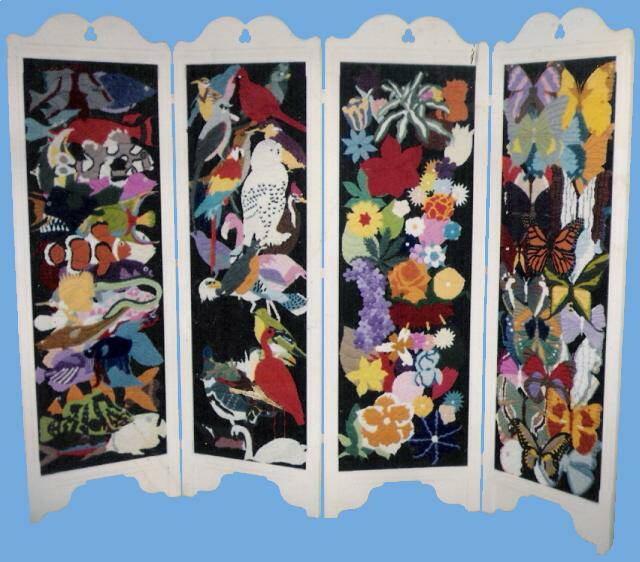
The Four F's (Fish, Fowl, Flowers, Flutterbys)The Four F's (Fish, Fowl, Flowers, Flutterbys)
The Four F's (Fish, Fowl, Flowers, Flutterbys)The Four F's (Fish, Fowl, Flowers, Flutterbys)The Four F's (Fish, Fowl, Flowers, Flutterbys)
The Four F's (Fish, Fowl, Flowers, Flutterbys)The Four F's (Fish, Fowl, Flowers, Flutterbys)The Four F's (Fish, Fowl, Flowers, Flutterbys)The Four F's (Fish, Fowl, Flowers, Flutterbys)
The Four F's (Fish, Fowl, Flowers, Flutterbys)The Four F's (Fish, Fowl, Flowers, Flutterbys)The Four F's (Fish, Fowl, Flowers, Flutterbys)
The Four F's (Fish, Fowl, Flowers, Flutterbys)The Four F's (Fish, Fowl, Flowers, Flutterbys)
The Four F's (Fish, Fowl, Flowers, Flutterbys)
The Four F's (Fish, Fowl, Flowers, Flutterbys)The Four F's (Fish, Fowl, Flowers, Flutterbys)
The Four F's (Fish, Fowl, Flowers, Flutterbys)The Four F's (Fish, Fowl, Flowers, Flutterbys)The Four F's (Fish, Fowl, Flowers, Flutterbys)
The Four F's (Fish, Fowl, Flowers, Flutterbys)The Four F's (Fish, Fowl, Flowers, Flutterbys)The Four F's (Fish, Fowl, Flowers, Flutterbys)The Four F's (Fish, Fowl, Flowers, Flutterbys)
The Four F's (Fish, Fowl, Flowers, Flutterbys)The Four F's (Fish, Fowl, Flowers, Flutterbys)The Four F's (Fish, Fowl, Flowers, Flutterbys)
The Four F's (Fish, Fowl, Flowers, Flutterbys)The Four F's (Fish, Fowl, Flowers, Flutterbys)
The Four F's (Fish, Fowl, Flowers, Flutterbys)
The Four F's (Fish, Fowl, Flowers, Flutterbys)The Four F's (Fish, Fowl, Flowers, Flutterbys)
Stitch-opedia

An encyclopedia of needlepoint Stitches...

Bookmark and Share