
Copyright 2006...Stitchopedia...All Rights Reserved
BRAIDED CHAIN STITCH
The Braided Chain Stitch is one of the numerous chain stitches available. This is an excellent
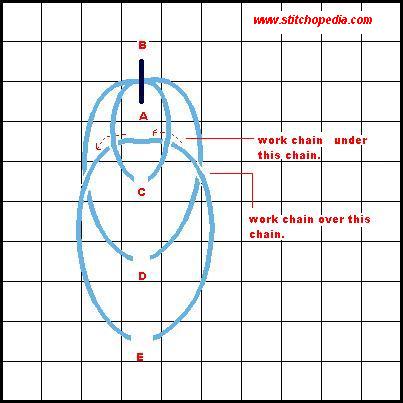
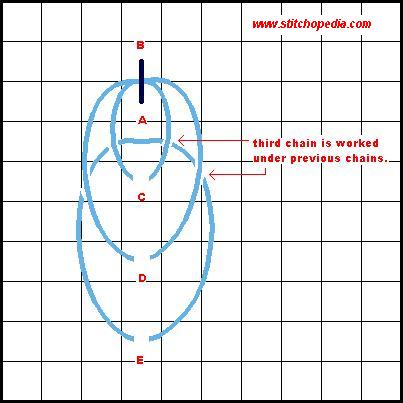
decorative stitch. The braided chain stitch is worked using a loose tension. It is a great choice for working around corners and curved areas. We will also be demonstrating the Heavy Chain Stitch on this page. The heavy chain stitch is worked exactly the same as the braided chain stitch, until diagram 4. If you choose to use either of these stitches as accent stitches, it is recommended that you work all other typees of stitches first. If you choose to work these stitches in rows, just add straight filling stitches between the rows. Four diagrams have been used to demonstrate this stitch.
Braided Chain Stitch (Diagram 1):
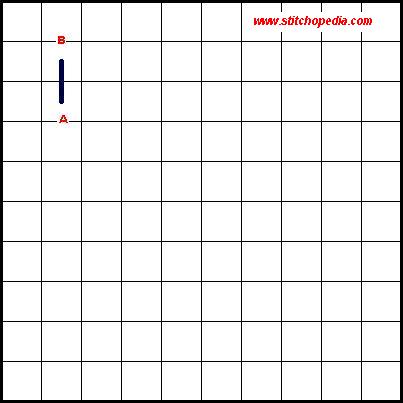
Bring the needle up at A, move up over one canvas thread, bring the needle down at B. Be sure to work this small stitch securely, as the next series of stitches will be worked into it. Now, continue on to Diagram 2...
Braided Chain Stitch (Diagram 2):
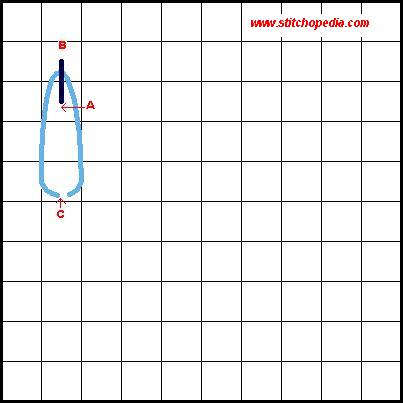
Beginning where we left off at B, bring the needle up at C, move up over three canvas threads, move under and through the A/B stitch - illustrated in dark blue (do NOT pass the yarn under the canvas thread, work it through the yarn only). Once you have worked the needle through the previous stitch, move the needle down over three canvas threads and bring the needle down at C. It is important to maintain a loose tension in order to create the chain. Now, continue on to diagram 3...
Braided Chain Stitch (Diagram 3):
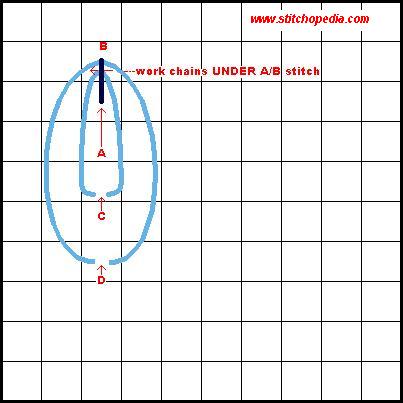
Beginning where we left off at C, bring the needle up at D, move up over five canvas threads, again, move under and through the A/B stitch - illustrated in dark blue (do NOT pass the yarn under the canvas thread, work it through the yarn only). Once you have worked the needle through the A/B stitch, move the needle down over five canvas threads and bring the needle down at D. Again, it is important to maintain a loose tension in order to create the chain. Now, continue on to diagram 4...
Braided Chain Stitch (Diagram 4):
Beginning where we left off at D, bring the needle up at E, move up over five canvas threads, work the needle/yarn OVER the second chain stitch (D) and work the needle/yarn UNDER the first chain stitch (C) - but NOT under the canvas threads. Move down over five canvas threads and bring the needle down at E. Again, it is important to maintain a loose tension in order to create the chain stitch. Although this sounds a little complicated, if you follow diagram 4 exactly as it is shown, you will see how easy this stitch can be. This diagram does not illustrate the correct thickness of the yarn, so the full effect of this stitch does not appear apparent. When complete, this stitch creates a nice, full look, similar to rich braiding.
HEAVY CHAIN STITCH
The Heavy Chain Stitch is another one of the numerous chain stitches available. This stitch is worked exactly the same as the braided chain stitch, except for diagram 4. At this point, you will see the needle/yarn is worked under both of the previous chains, instead of just one, as is the case with the braided chain stitch. Four diagrams have been used to demonstrate this stitch. Clicking on the PRINTABLE VERSION icon, located at the end of the series of diagrams, will direct you to the page to print these instructions.
Heavy Chain Stitch (Diagram 1):
Bring the needle up at A, move up over one canvas thread, bring the needle down at B. Be sure to work this small stitch securely, as the next series of stitches will be worked into it. Now, continue on to Diagram 2...
Heavy Chain Stitch (Diagram 2):
Beginning where we left off at B, bring the needle up at C, move up over three canvas threads, move under and through the A/B stitch - illustrated in dark blue (do NOT pass the yarn under the canvas thread, work it through the yarn only). Once you have worked the needle through the previous stitch, move the needle down over three canvas threads and bring the needle down at C. It is important to maintain a loose tension in order to create the chain. Now, continue on to diagram 3...
Heavy Chain Stitch (Diagram 3):
Beginning where we left off at C, bring the needle up at D, move up over five canvas threads, again, move under and through the A/B stitch - illustrated in dark blue (do NOT pass the yarn under the canvas thread, work it through the yarn only). Once you have worked the needle through the A/B stitch, move the needle down over five canvas threads and bring the needle down at D. Again, it is important to maintain a loose tension in order to create the chain. As I have previously stated, this is exactly the same as the first three diagrams of the braided chain stitch. The next diagram will illustrate how this stitch differs from the braided chain stitch. Now, continue on to diagram 4...
Heavy Chain Stitch (Diagram 4):
Beginning where we left off at D, bring the needle up at E, move up over five canvas threads, work the needle/yarn UNDER the second chain stitch (D) and work the needle/yarn UNDER the first chain stitch (C) - but NOT under the canvas threads. Move down over five canvas threads and bring the needle down at E. Again, it is important to maintain a loose tension in order to create the chain stitch. Although this sounds a little complicated, if you follow diagram 4 exactly as it is shown, you will see how easy this stitch can be. This diagram does not illustrate the correct thickness of the yarn, so the full effect of this stitch does not appear apparent. When complete, like the braided chain stitch, this stitch creates a nice, full look, similar to rich braiding.
 | ||||||
Stitch-opedia
An encyclopedia of needlepoint Stitches...

*Stitch Index*
Select the first letter of the stitch you are looking for...
*Stitch Index*
Select the first letter of the stitch you are looking for...
| ||||||
