The History of Embroidery and Its Modern Development
By: Robbie Darmona
Most people associate embroidery with a boring way to fill up a housewife’s daily life. The uninteresting procedure of producing a stitched picture on a cloth may seem to many uninitiated a sheer waste of time. But, once you learn more about it, you may come to discover how incredibly fascinating it is.
To begin with, embroidery has a long history, which dates back to more than 3000 years B.C.It is probably the first form of art, as man has used decoration with
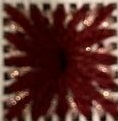
The Eye Stitch is sometimes referred to as the Diamond Eyelet Stitch. This is a large stitch and would not, therefore, be recommended for project that will receive
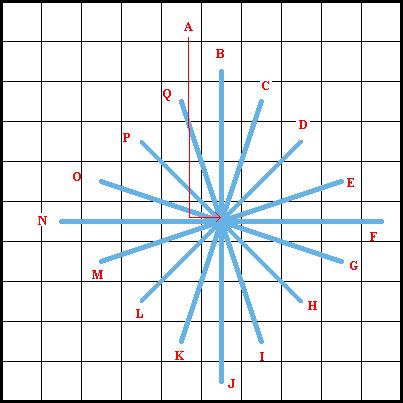
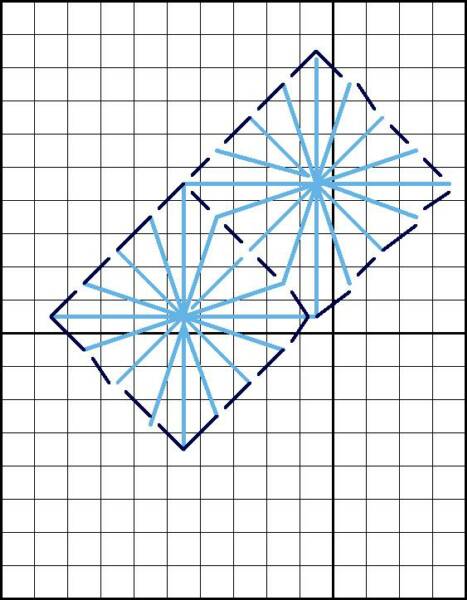
Eye Stitch (Diagram 1):
Bring the needle up at A, move up over four canvas threads, bring the needle down at B. Bring the needle up at A again, move up over three canvas threads and to the right over one canvas thread, bring the needle down at C. Bring the needle up at A again, move up over two canvas threads and to the right over two canvas threads, bring the needle down at D. Bring the needle up at A, move up over one canvas thread and to the right over three canvas threads, bring the needle down at E. Bring the needle up at A, move to the right over four canvas threads, bring the needle down at F. Bring the needle up at A, move down over one canvas thread and to the right over three canvas threads, bring the needle down at G. Bring the needle up at A, move down over two canvas threads and to the right over two canvas threads, bring
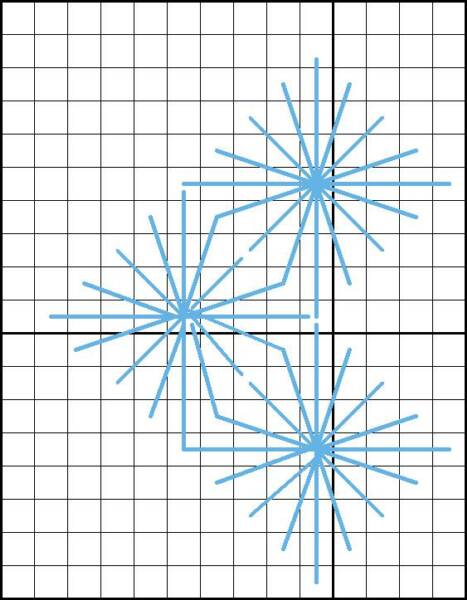
Eye Stitch (Diagram 2):
This diagram illustrates how the each eye stitch is worked into the previous eye stitches. If you choose to use this stitch for anything other than a decorative stitch (a stitch that covers a base of background or filling stitches), you will need to use filling stitches to cover any empty spots of canvas - the Diagram 3 fpr a sample of a filling stitch.
Eye Stitch with Backstitch (Diagram 3):
This diagram illustrates how the eye stitch will look with back stitches worked around each eye stitch. The back stitches will fill in any spaces where the canvas shows through. For detailed instructions on working the backstitch go to the Back Stitch page.
EYE STITCH with BACKSTITCH
wear and tear. We have also illustrated this stitch with backstitches added for filler stitches. Note: When choosing yarn for this stitch, be sure the yarn will pass through the center canvas hole sixteen times without stretching the canvas out of shape. Two diagrams have been used to demonstrate this stitch. Clicking on the PRINTABLE VERSION icon, located at the end of the series of diagrams, will direct you to the page to print these instructions.
the needle down at H. Bring the needle up at A, move down over three canvas threads and to the right over one canvas thread, bring the needle down at I. Bring the needle up at A, move down over four canvas threads, bring the needle down at J.
Continue working in this manner until you bring the needle down at Q. At that point, you will have completed the circle and thus, completed the Eye Stitch.
Continue on to Diagram 2...
Do you have a sample of this stitch that you would like to share? If so, click here...
apprenticeship until they were approved to practice on their own.
Embroidery has not only a long history. The most amazing fact is that it had evolved simultaneously in almost every part of the world where people practiced sewing. Different cultures formed different embroidery types. The development of needlework also depended on the various materials used by a certain culture. The styles of embroidery, which different nations invented, were passed on generations to generations and many of them have survived till nowadays.
We know of the embroidery work practiced by the ancient Egyptians. It was done with white threads on a white canvas. This embroidery is so sophisticated that even
aesthetic purposes as early as the invention of the needle and thread themselves. What is more: you may not be aware but actually embroidery was a man’s not a woman’s invention! In ancient cultures from every part of the world, embroidery and needlework was regarded as a priority only for the chosen and talented boys. The embroiderers-to-be had to study the fine craft under the supervision of a master. It took them more than ten years’
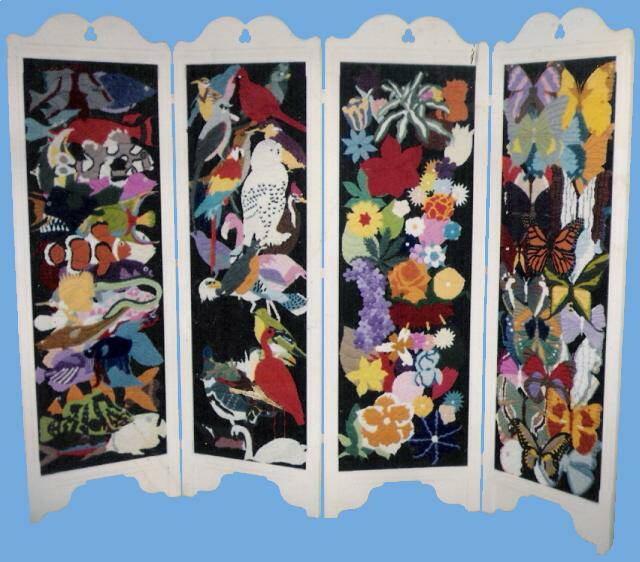
nowadays the modern technologies have difficulty doing it the same way. Another type of finest quality was the Chinese silk embroidery, known as the two-sided embroidery. It is amasingly intricate and it takes years of hard efforts to complete. Also famous is the “raised” embroidery, practiced in the 16th century. It is better known as the Elizabethan embroidery. It involved stitching decorations like butterflies, leaves and other beautiful designs with the usage of wool, leather and wood padding. Still
popular today is the Western European embroidery called crewel. This technique uses two-ply wool stitching on linen twill and is practiced when making decorations on different household cloths, such as counterpanes, wall hangings, draperies, chair
coverings.
What strikes most in these embroidery styles is that they are incredibly difficult to produce and many people lose their patience before completing one canvas. Nowadays, embroidery has developed so far, that even the clumsiest novice can try and stitch something beautiful by using computer software or high-tech sewing machines. That makes things more pleasant for the new beginner.
Despite the available technology, artistic embroiderers prefer authenticity and still spend their time doing everything themselves. The finest details cannot be produced by technologically-based machines, because embroidery is most of all a kind of art, and all art needs its talented artists.
Article by Robbie Darmona www.robbiedarmona.com -For more information you can visit embroidery designs www.theneedlework.com
***Stitch Index*** (Alphabetical)
A - I
***Stitch Index*** (Alphabetical)
I - Z
Copyright 2006...Stitchopedia...All Rights Reserved
An encyclopedia of needlepoint Stitches...